World Diabetes Day: One Hope

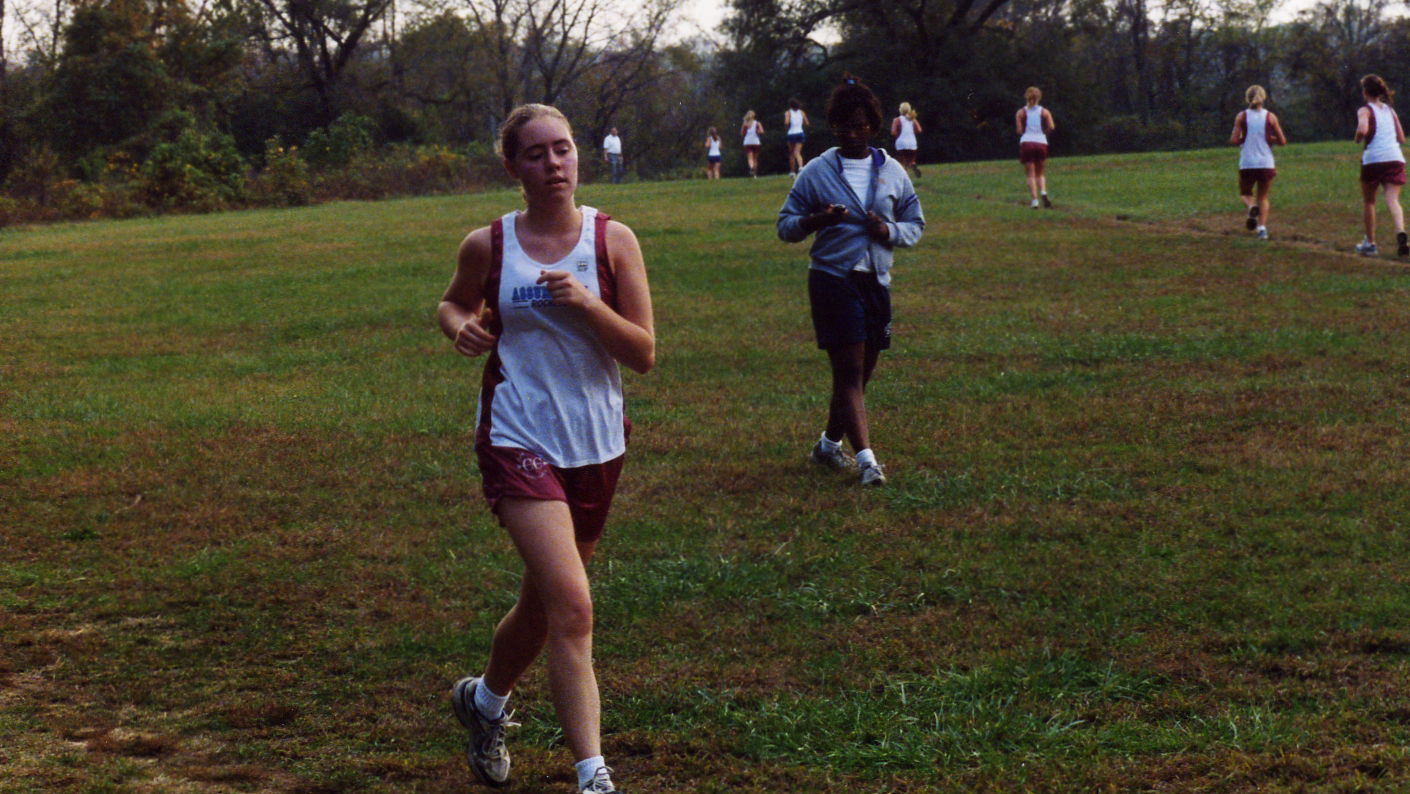
Photo courtesy of Hilary Brown

Photo courtesy of Hilary Brown

Today is World Diabetes Day, a day led by the International Diabetes Federation (IDF) to raise awareness and advocate for this disease. Globally, there are 382 million people living with diabetes. The U.S. is one of the top 10 countries for the number of people with diabetes, which is about 24 million. The IDF estimates that worldwide the numbers will continue to increase so that by 2035, 592 million people will be living with this disease.

So what is diabetes, and why should we be worried? Put simply, diabetes is when the body’s pancreas stops producing insulin, which we need to digest our food for energy. Type 1, the version I have, is an autoimmune disease, where a person’s pancreas stops producing insulin completely, and one must take shots of insulin to live. Type 2, the version more well-known, is where a person’s pancreas is still producing some insulin, but not enough to convert all of the food into energy.

According to the Juvenile Diabetes Research Foundation (JDRF), the largest global funder for Type 1 diabetes research, as many as three million people in the United States have Type 1 diabetes (15 percent of which are children). Like JDRF says, insulin is not a cure, and they are working to change Type 1 to type none.

One can hope. Continue reading

A Community of T1D Veterans

This Veterans Day I would like to highlight something a little different on Sugarcoated – the concept of diabetes veterans.

I was diagnosed late in life at 22 (well for Type 1s, that is). I had missed out on growing up with the disease, among the support of family, friends, and fellow juvenile diabetics. Yes, I say “missed” because ever since I was diagnosed, I’ve felt largely excluded from the Type 1 community. Maybe it’s why I’ve never involved myself with organizations like the Juvenile Diabetes Research Foundation (JDRF) until now.

Because you see, I had a different experience than most Type 1s I meet. They were diagnosed at six or 13 and remember attending diabetes camp and having their moms pack them juice boxes for even the shortest trips. I’m not saying their diagnosis wasn’t daunting or depressing because after all, it’s still an incurable chronic disease. But in growing up with it, they developed a stronger support system. Through camps and fundraising events, they met other diabetics like them. They became friends; they shared stories; they didn’t feel alone. Continue reading

There Is A Moment…

There-Is-A-MomentThere is a moment when the sun hasn’t quite set, when the street lamps are on, but a wasp lands near your coffee cup, when the trees are multicolored, but you have a slight tan line from where your watch was. There is a moment when you stop thinking about work’s next projects and the errands you have to run when 5pm hits, when you stop thinking about travel plans for the holidays and this year’s gifts, when you stop feeling that itch for a run or the desire to binge on Halloween leftovers.

There is a moment when the water in the pot boils over, but you let it run in jagged lines towards the gas stove, leaving white marks in its path. There is a moment when you hurl your continuous glucose monitor (CGM) receiver across the room, and it knocks your foam roll for physical therapy to the floor. There is a moment when you scream at your insulin pump to stop beeping even though it can’t hear you and won’t listen.

There is a moment when you turn your phone off and hide it in the darkest recesses of your bedroom. No one will try to contact you so no one will ever know you did this to disconnect from the world because you are tired of incompetent co-workers, of failed best friends, of family members who no longer return your calls. You refuse to turn on that phone to check the weather for tomorrow, assuming it will be sunny and fallish.

Continue reading

National Diabetes Month: Wearing Blue Proudly

Carb-worthy ecardNovember marks National Diabetes Month. It includes World Diabetes Day, which happens to fall on the anniversary of insulin discoverer Frederick Banting’s birth on November 14. Yesterday was T1Day, a day for the Type 1 diabetes community to come together and not only raise awareness for our disease, but to provide support.

Yesterday was also my first inauguration into the world of Type 1 diabetes. I have been a Type 1 diabetic for the past five years, diagnosed late at 22, and in that time, I’ve only met a few other diabetics like myself. But yesterday, I volunteered at the Juvenile Diabetes Research Foundation’s annual Hope Gala in DC.

From the start, one of the fellow volunteers asked me if I had diabetes. I noticed the pump attached to her waistband, and for the first time in my life, I truly felt a part of a community. I explained that I had no family history and that I was diagnosed as an adult, as opposed to most Type 1’s who are diagnosed in childhood. But even so, we talked about insulin pumps, about exercising, about being diagnosed, and the everyday balance. Continue reading

Ugh … Treadmills

AHS-RunningI have always had an irrational fear of treadmills. Much like water and fire – except I eventually got over those. I never quite mastered the treadmill, and it may be even more surprising to learn that in the 10 years I’ve been running long distance, I never tried the treadmill, until a few weeks ago.

For the past month, I have been attending physical therapy sessions to strengthen my iliotibial (IT) band. When I started physical therapy, I could only run seven minutes before an excruciating pain intensified around my knee, a result of an inflamed IT band. It certainly wasn’t a result of overuse – I had just started running again after nine months of rest.

I’m an outdoor runner. I’ve never joined a gym. I like the changing scenery and the varying climate conditions. But the physical therapy office did not have an outdoor track. It had a few machines such as the elliptical and of course, the dreaded treadmill. Continue reading

Burn Out: How to Stay Passionate About Your Work

Burn-OutIt’s another day at the office. The usual 9 to 5, although ever since I started earning a salary, it’s more like 9 to 6 or 7. I love my job. In fact, in the 10 plus years I’ve been working, it is the first job I have ever loved, the first job I actually respect my co-workers, and the first job I’m willing to dedicate extra time for growth and advancement.

But there are also times when I despise my job, when I am overcome with negative thoughts and I wonder if all my time and commitment is actually worth it. I’ve never been truly valued in any professional job I’ve had. I’ve always been at the bottom of the totem pole. And although I now have two degrees and earning more, I am still young, and still at the bottom. A part of me wonders if this will always be the case, if due to this economy and my age, I’m destined to be at the bottom, forever hoping, but never quite breaking that glass ceiling.

Silly, I’m sure, but we’ve all experienced burn out. I’m usually good until the two-year mark, and then I realize how much I’m not valued, how the benefits aren’t worth it, and how much I don’t care about my performance anymore. So I find a new job or a new career. I’m happy for a while, and then it starts all over again. Continue reading

The Thrifty Gene: Diabetes Was Once a Survival Advantage

Thrifty-GeneToday, I was reviewing a book on childhood obesity for work, and I came across an interesting passage on the “thrifty gene.” It sounded familiar, probably something I learned about back in high school biology, but for some reason, the idea was new for me. Geneticist James Neel proposed the hypothesis in 1962 in his attempts to understand how diabetes survived natural selection.

I agreed. How did Type 1 diabetes, an autoimmune disorder with obvious negative and previously fatal effects, often inflicting children pre-reproductive stage, survive? Neel proposed it was once a survival advantage to be able to fatten quickly and survive seasons of food scarcity. We’re talking hunter-gatherer societies. And because it was such a survival advantage, it continues to be passed down generation after generation.

The only difference is now we don’t have to worry about famines. We keep eating and eating, but our bodies never have to endure hunger and depend on the survival mechanism of diabetes to eat away at our stored fat without our blood sugar dropping and keep us alive. No, our blood sugar keeps rising and rising until our bodies drop dead or malfunction.  Continue reading

I Swing Alone: A Diabetic’s Confession

Photo credit: Sandy Hunt

Photo credit: Sandy Hunt

I swing alone. My feet now touch the ground. The figure eight chains are rusted. The black u-shaped seat is worn at the edges. I wonder for how long it will hold my weight. I am much bigger now, but I still love the feeling of when my feet leave the ground. For a fleeting moment, I wonder if they will ever return, and then gravity brings me back to reality. I swing alone. I do not belong here anymore, but I also do not want to leave.

The red and brown leaves fly across my shadow in the direction of the setting sun. I envy their journey, but I do not envy their withered state. They are at the end of their lives. I should be beginning mine, but ever since I turned twenty-two, I feel lost within this body. I feel like it’s slowly giving up on me. From a pancreas that doesn’t work to a series of infections to chronic pain to now an IT band that won’t let me run, I feel like it’s shutting down on me. It’s at the end of this journey, and although I know I have years left, I don’t know what quality that will be.

It will let me enjoy one last swing, but it will not let me enjoy the simple pleasures in life – the simple luxuries our physical beings allow. I cannot eat what I want; I cannot exercise how I want, and I cannot have a long-lasting sexual relationship. My mental state has never succumbed to my body – it’s only succumbed to itself, but how much more can my mind take? Can a mind be free with a useless body? Can a mind truly enjoy life with a body that’s slowly withering away? Continue reading

Diabulimia: A Personal Struggle With Body Image and Diabetes

Strawberry-Cream-PieAccording to the American Diabetes Association, diabetic women are nearly three times more likely to develop an eating disorder than non-diabetic women.

Diabulimia is one of the more prevalent eating disorders among Type 1 diabetic women, that is reducing the amount of insulin one takes to lose weight. Scary, right? It certainly is.

Because not only do eating disorders lead to their own series of problems (slow heart rate, low blood pressure, brittle bones, hair loss, severe dehydration, etc.), but when a Type 1 diabetic does not take the insulin he or she needs, this just adds to the complications which may lead to diabetic ketoacidosis, stroke, and even death.

Unfortunately, I was one of those Type 1 women, and still am, to a certain extent because I believe one never completely finishes the battle with body image. But my story started before I was diagnosed with Type 1 diabetes in 2009. It started at 13 when I noticed I no longer fit into my clothes and asked the one irrevocable question: Am I fat? Continue reading

Happy Anniversary Sugarcoated!

According to my LinkedIn account, this month marks the one-year anniversary of this blog. I’m impressed I kept it going one month, much less a year. But here we are, more than a year since my short book of essays, Sugarcoated, was published, since I graduated with an MFA in writing and publishing, and now a year sharing my trials and tribulations online with you.

It seems fitting to focus on the numbers. I leave their meaning up to you.

of three million Type 1 diabetics (T1D) in the U.S.

times per week that I plan to spend writing for this blog

seizures as a result of hypoglycemia or low blood sugar

times per week I think my body may be curing itself, and I no longer have to live with T1D

17 times I change my continuous glucose monitoring (CGM) system site per year (this does not count the number of times I re-tape the transmitter so the wire stays beneath my skin)

20 units of insulin I use every day Continue reading