Author’s note: Over the pandemic, I watched 59 theatrical animated films created by Walt Disney Animation Studios in order of release. If you haven’t already, I highly encourage you to read the first post in the series, Snow White to Strange World: Re-visiting Disney One Animated Film at a Time.
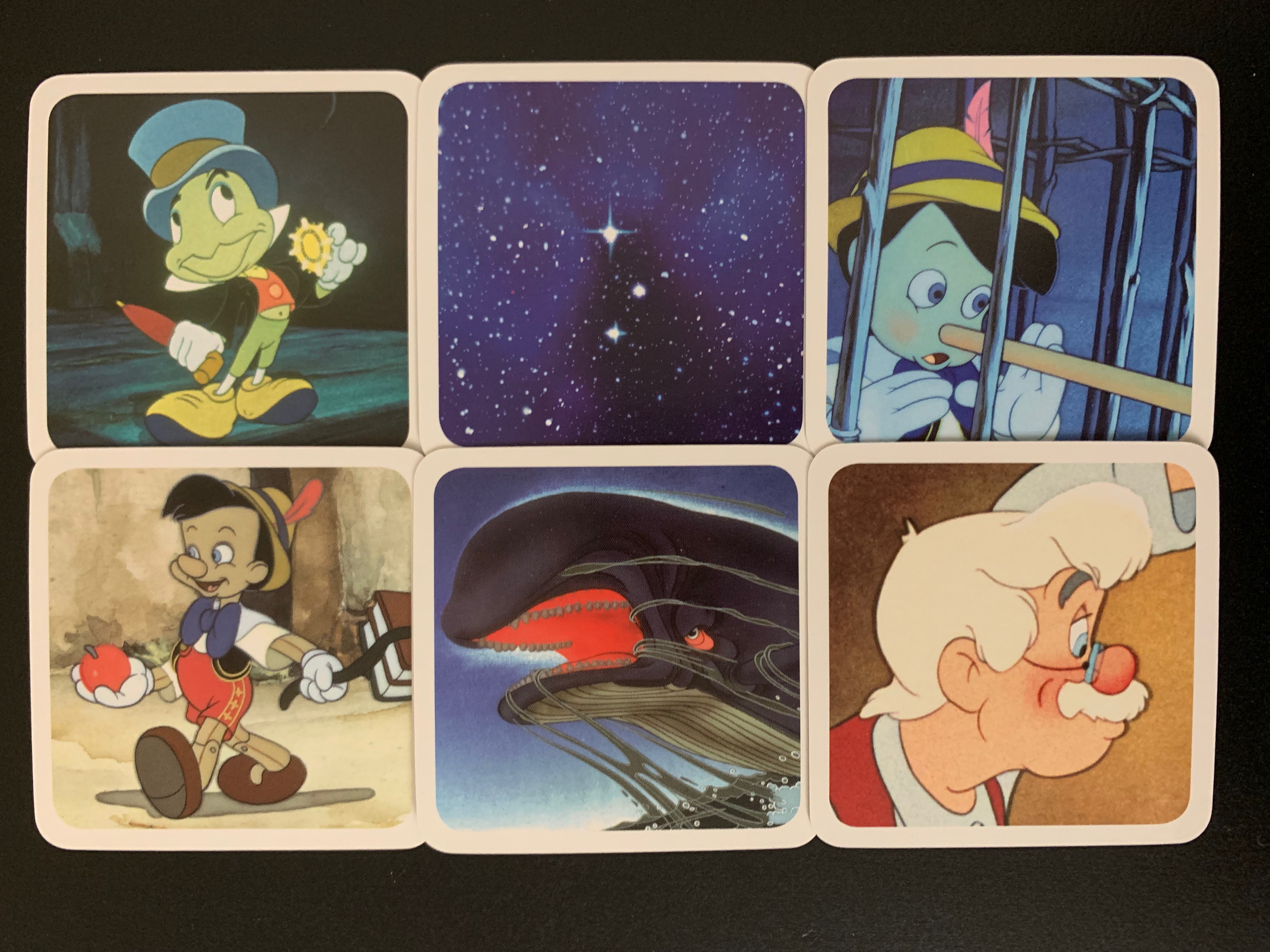
“I may be live bait down there, but I’m with you.” I certainly wish I had Jiminy Cricket with me during the darkest Disney trauma of the 1940s.
But before we get to Pinocchio, we must not gloss over the blatant racism of the resource-limited 1940s and the one deleted scene from the still renown Fantasia.
(Disclaimer: while I tried to educate myself throughout this process, researching and referencing external sources, my viewpoint is still limited, and I apologize in advance for anything I may have overlooked.)
Animation’s Racist Past (and Present)
Before embarking on this journey, I was not familiar with the likes of The Reluctant Dragon, Saludos Amigos, The Three Caballeros, and Melody Time. Minus the obvious marketing ploy of The Reluctant Dragon, the other films overused Donald Duck to make up for the lack of animation resources during World War II.
Needless to say, I am not a huge Donald Duck fan (at least the 1940s version). And while these films included disclaimers for their misrepresentation of culture and people of color, the most shocking scene (though not shocking for those familiar with the over abundant use of stereotypes and racist images in media) included a short animated clip within the “Baby Weems” segment from The Reluctant Dragon.
This film was interesting in its own right for giving us a behind the scenes look at Walt Disney Animation Studios at the start of its heyday (though a glossed over, staged approach, at best, and racism and sexism abounds throughout the live action and animated portions of this film). These clips, while abhorrent, also showcase the extreme racial stereotyping pervasive in cartoons and animated films.
Whereas the racist caricature prevalent in the theatrical release of Fantasia was removed from all subsequent versions; the racist undertones lived on. And then there’s Dumbo. A traumatic movie in its own right. Not to mention the Jim Crow crow and the faceless black laborers performing “Song of the Roustabouts” that literally reads:
We’re happy-hearted roustabouts | When other folks have gone to bed | We slave until we’re almost dead | We’re happy-hearted roustabouts | We don’t know when we get our pay | And when we do, we throw our pay away | We get our pay when children say | With happy hearts, “It’s circus day today”
Racism-aside, the trauma inherent in this story alone makes me question why they would ever remake this film (oh right, money). But the racism didn’t stop there, even if certain elements did progress to better representation. Even by the late 2000s, we still had white washing (more on that to come later). We still do, in all honesty.
There is much I will never understand, but it has been eye opening and helpful to think critically throughout this rewatch, to point out the problems and raise awareness, and advocate for a better future.

Trauma, Glamour, And Lucifer
I cried so much during Pinocchio, Dumbo, and Bambi. So, by the time I got to Cinderella, I was like finally, a movie without traumatic death or boys being turned into donkeys (and hopefully no racism, though we still have a lack of representation, and oh, sexism is about to make a comeback – did we all forget about the sexualized bunny in Bambi? I certainly did. Twitterpated, indeed.).
I mostly related to the owl in Bambi as an adult, “same thing every spring, same sweet song, pain in the pin features I call it.” The owl (who oddly remains nameless) is clearly just trying to live his life in peace and encourage the teenage animals not to reproduce, so hopefully the less nuisance he has to deal with. My kind of curmudgeon. I also love how Bambi’s dad enters the scene at opportune moments to save the day and then peaces out. Projecting gender norms, perhaps?
Bambi also appears to be Disney’s first attempt at showing the environmental impacts of humans (gender reveal parties and wildfires, anyone?). So, after crying over shot deer and quail and hating hunters and humans for life, I sat down one Saturday afternoon with a beer and started Cinderella.
As a reminder at this point in history, Walt Disney Animation Studios was on the verge of filing for bankruptcy. Their survival depended on two films in the works – Cinderella and Alice in Wonderland. They went with whichever film finished first, and that happened to be Cinderella (which was fortunate since Alice in Wonderland flopped at the box office – I’m still rooting for you, White Rabbit).
So, maybe we just have people who were efficient and effective at their jobs to thank for what became of the Disney canon and the forever princess falling over crying trope?
But after watching Cinderella as an adult, I realized why it saved Disney from extinction and why they continued to bank their legacy on the princess theme. It was the most surprising rewatch of the entire 59 films I experienced (that’s 86 years of animation). Cinderella has now become one of my favorite Disney films ever, though not for the reasons you might suspect.

Cinderella was monumental for three reasons:
Female Centric (Empowered by Mice)
It’s the first female centric film we’ve had since Snow White and the Seven Dwarfs (though really the dwarfs do outnumber the female protagonist and antagonist and the prince comes in to save the day). But we do get our first female narrator.
And even though Lady Tremaine is the antagonist in this film, along with her two daughters, given historical context, her motives actually make a lot more sense. So, even though considered evil (I mean she has a cat named Lucifer, can we be any more subtle, Disney?), she and her daughters would likely be left destitute without the help of a man. So, she was using what resources she had to maintain power and control over her own fate and that of her daughters (destiny is all – sorry, wrong series).
Does this mean she didn’t totally abuse Cinderella and create a superlative toxic environment to hold onto that power? Absolutely not. And a theme we see even today among women leaders with limited positions of power. In fact, the film displays female in-fighting so accurately for a film created by men, that it’s likely a reflection of real-life observations and a testament to how detrimental this toxic cycle is.
Improved Storytelling (With a Dress)
But also, I’m still terrified of Lady Tremaine. The animation on her shadows and green eyes is telling. And the animation is this film is stellar. Especially the scene where Cinderella’s dress transforms into a ballgown. Monumental for the time. And the music. “So this is love” is still one my favorite songs from the Disney archives (though I wonder if its popularity on social media reels is partly to blame for this?).
The real entertainment embedded within this film is among the animals. Finally some retribution for the mistreatment of the 1940s. As a cat owner, Lucifer was hands down my favorite part of this rewatch, and while he’s supposedly “evil,” his actions are merely that of a cat. And Lucifer deserved better in the end (though apparently he did show up in the sequels, so crisis of faith averted). The mice are rather ingenious, and I did enjoy the birds getting their revenge (even though I still love my cats). Cinderella definitely had the best animal friends (a theme I learned I really do appreciate in Disney films). One cannot do this alone.
They Can’t Take Away Her Dreaming (Forget the Shoe)
But the real reason I loved this film so much on rewatch is because it’s not a love story (at least how I interpreted it). So, the criticism that we need more character development for the prince is irrelevant. He was merely a means to an end. Though his and his family’s efforts to find her were quite noble (and something lacking in the ghosting dating scenes of today).
Because the story isn’t about finding your prince or true love – it’s about finding your way out of a toxic and abusive situation. Everything she does throughout the film – singing while cleaning, befriending animals, creating dresses (one could say dreaming up a fairy godmother) – is a mere escape and distraction from the powerless situation she’s stuck in. Cinderella goes to that ball in the hopes those memories will keep her going for many months to come (or maybe in the hopes she’ll never return). She makes the most of it and loses a shoe in the process.
So, the look on Cinderella’s face when she finds out the man she danced with was the prince is the moment she realizes she found her ticket out of this hell-hole, like when you put in your two weeks’ notice at work and no longer give a damn. Lady Tremaine’s reaction is the realization she’s lost her leverage and her power. So again, two women empowering themselves to improve or maintain their current circumstances. Though let’s be honest, Cinderella is way too nice to get the corner office.
At the start of the film, Cinderella is awakened by a clock she remarks is a killjoy (well said), but she also says something even more profound: they can’t order me to stop dreaming.
Overall, in my first 12 years with Disney, I learned I can handle overdramatic and entitled princesses more than I can mistreated animals. You do you, Cinderella.
This post is the second in a series on re-visiting Disney one animated film at a time.
 Sugarcoated